Growing and Using Herbs, part 1: Basil
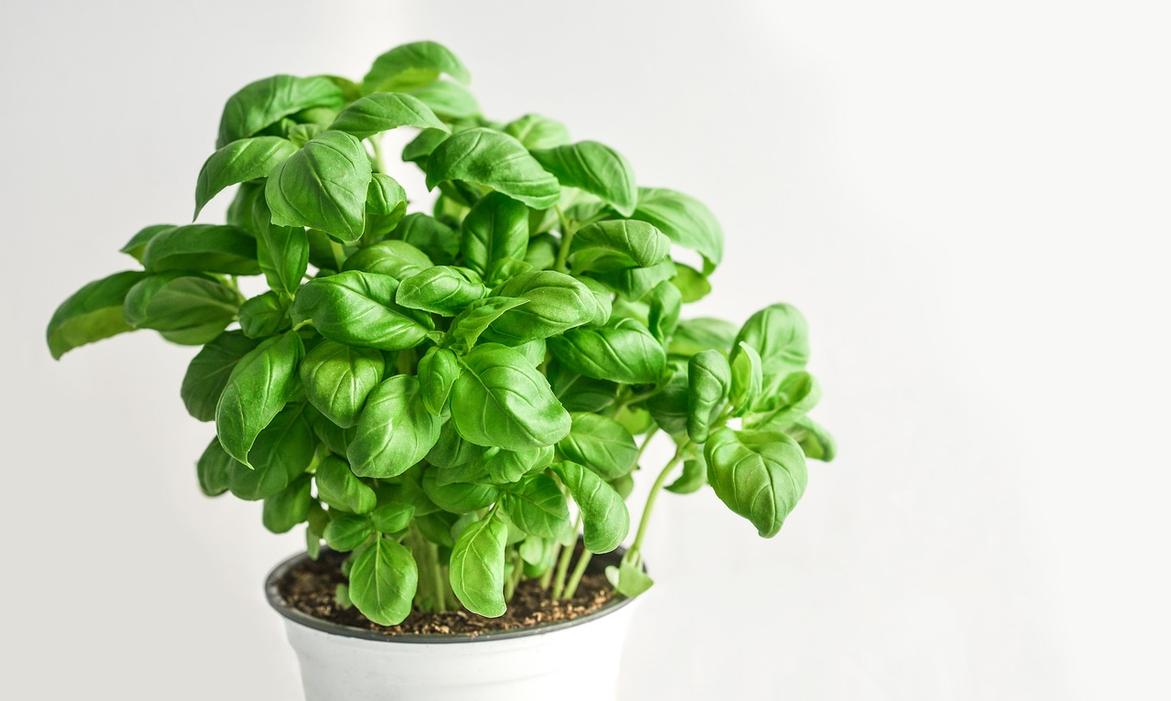
Basil (Ocimum basilicum) is a culinary herb of the family Lamiaceae. It is also called the “king of herbs” and the “royal herb” possibly because of the name’s meaning in Greek. It is best known as a
culinary herb prominently featured in Italian cuisine, and also plays a major role in Southeast Asian cuisines. Depending on the species and cultivar, the leaves may taste somewhat like anise, with a strong, pungent, often sweet smell.
How to Grow Basil
To grow this tender annual from seed, sow in flats about 6 weeks before the last frost. Sow seeds and cover with the growing medium to about twice the depth of the seed. Keep soil at 70-72 degrees F, and keep moist. Basil seedlings are very sensitive and most losses occur due to low moisture and low temperatures. If not crowded in the seed flat, do not thin, but let them grow to 3 to 4 inches before transplanting. Basil likes the warmth of the full sun to grow best. Lift transplants carefully by the leaves instead of the stem. Set outdoors only after soil and air temperatures are warm. One chilly night can set plants back.
Basil can be directly sown in the garden after the soil has warmed up and nights are not too cool. Be sure to sow to a depth of twice the size of the seed or heavy rains may wash the seeds away. Purple basil, lacking chlorophyll, is more susceptible to shock in the early stages.